Federal Republic of Somalia
Somalia is entering a new era of prosperity in 2026, marked by the commencement of its first ultra-deepwater exploration well at depths of around 3,500 meters. This achievement places Somalia among the select group of nations capable of operating in technically demanding offshore environments, signaling its transformation into a modern energy frontier. For decades, Somalia’s petroleum potential was recognized but remained untapped; today, the country is poised to unlock vast reserves that could reshape its economic future and position it as a key player in East Africa’s energy landscape.
The petroleum story of Somalia stretches back to the mid-20th century. Early concession agreements and seismic surveys attracted major international oil and gas companies such as ExxonMobil, Shell, ConocoPhillips, and ENI. For decades, Somalia’s petroleum potential remained largely dormant, with only legacy data and scattered wells confirming a functioning petroleum system. Renewed momentum came in 2008 with the drafting of a petroleum law, followed by seismic campaigns in 2015 and 2016 that de-risked source rock presence. In 2018, a landmark resource-sharing agreement between the Federal Government and Member States clarified ownership, and the 2020 Petroleum Law established the Somalia Petroleum Authority (SPA) as the national regulator in 2022.
By 2023 and 2024, Somalia had signed multiple Production Sharing Agreements with Turkish Petroleum (TPAO), Liberty Petroleum, Coastline Exploration, and GulfSom. Offshore basins Obbia, Coriole, and Juba Lamu are now recognized as highly prospective, with tilted fault blocks, carbonate buildups, and mature Cretaceous source rocks offering diverse play types. The Juba Lamu Basin offers thick deltaic sequences and stacked traps, while the Obbia Basin presents Jurassic syn-rift reservoirs and carbonate highs with natural porosity. The Coriole Basin adds compressed structures and stratified subsurface layers, highlighting Somalia’s geological richness. Each of these basins represents a frontier opportunity, with the potential to deliver discoveries that could rival other prolific regions along the East African margin.
The scale of opportunity is immense. Somalia’s offshore acreage includes 247 licensable blocks, each covering up to 5,000 km², with 234 blocks still available for investment. This vast frontier offers one of the largest unexplored offshore regions in East Africa, positioning Somalia as a potential hub for new discoveries. These agreements are not just contracts; they are commitments to a shared vision of prosperity, where Somalia’s resources are developed responsibly and strategically to benefit both investors and the Somali people.
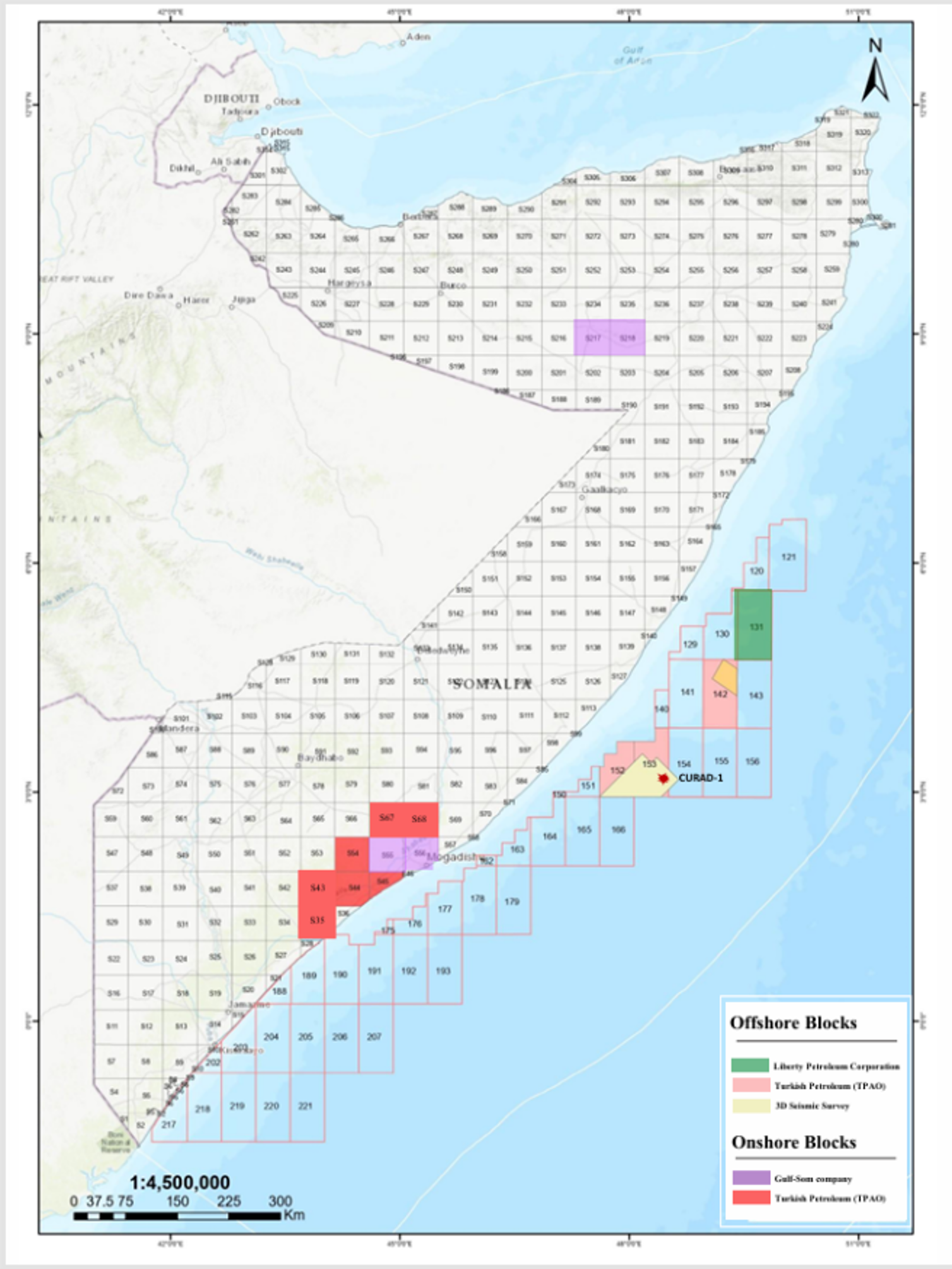
A central pillar of Somalia’s prosperity narrative is Liberty Petroleum Corporation. In 2024, Liberty signed a Production Sharing Agreement (PSA) for Block 131, covering nearly 5,000 km². The block comprises three stratigraphic levels, with closures mapped at the Lower Jurassic, Middle Jurassic, and Lower–Mid Cretaceous, hosting oil plays and extensive carbonate reef systems. Traps extend for tens of kilometers, offering significant exploration potential. Liberty’s entry is historic: only one offshore well has ever been drilled in Somalia, and that was in shallow waters. While advanced 3D seismic acquisition has previously been introduced in Somalia, this program represents the first application in Block 131 and brings the potential for ultra-deepwater drilling. Somalia is estimated to hold up to 30 billion barrels of oil reserves.
The company’s leadership has emphasized that the agreement reflects more than a decade of dialogue and preparation, designed to deliver maximum benefit to the Somali people. Liberty Petroleum’s presence signals strong investor confidence and demonstrates Somalia’s ability to attract serious international partners willing to commit capital, technology, and expertise to frontier exploration. This partnership highlights Somalia’s readiness to move from untapped potential to active development, ensuring that offshore discoveries contribute directly to national prosperity and long-term growth.
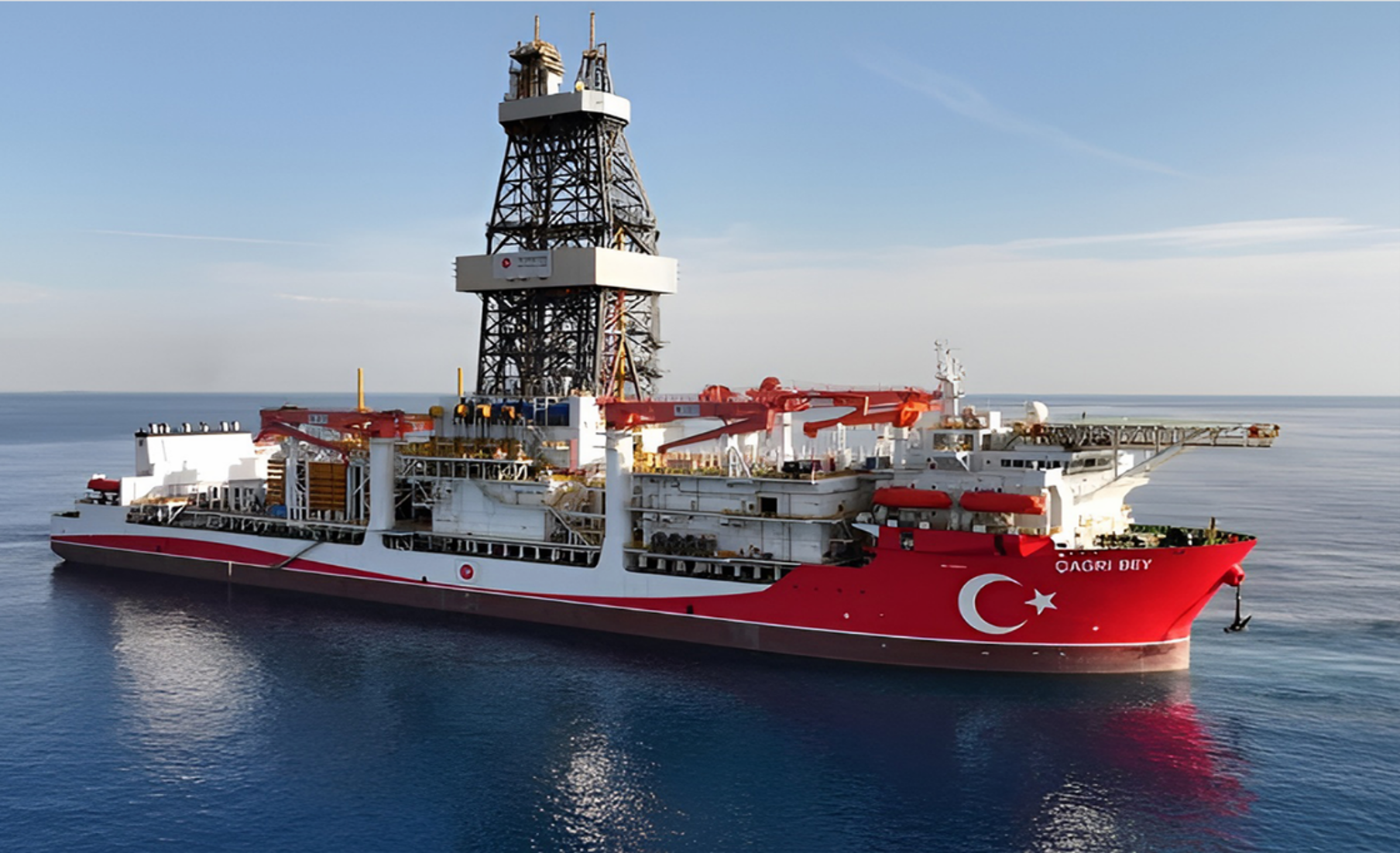
Equally transformative is the arrival of Turkey’s ultra-deepwater drillship Çağrı Bey. Deployed to Somalia’s Curad 1 well site, located about 370 km offshore Mogadishu, the vessel represents cutting-edge technology. Built in South Korea, the Çağrı Bey is a seventh-generation ultra-deepwater drillship measuring 228 meters in length with a 114-meter rig tower. It is capable of drilling to 12,000 meters total depth. The Curad 1 well targets a water depth of 3,500 meters, with drilling planned to extend 4,000 meters below the seabed to a total depth of 7,500 meters. If achieved, Curad 1 would rank among the world’s deepest offshore wells. The location was selected after TPAO’s seismic vessel Oruç Reis collected 3D data across 4,465 km² in 2024–2025. The deployment of Çağrı Bey demonstrates Somalia’s ability to host ultra-deepwater operations, a technical frontier that only a handful of nations have reached. This milestone is not only a technical achievement but also a symbol of Somalia’s determination to join the ranks of global energy powers.
Onshore, renewed exploration adds further promise. Blocks licensed to GulfSom and TPAO have confirmed oil and gas shows, reinforcing the presence of functioning petroleum systems across Somalia’s territory. Legacy wells such as Afgoi 3 and El Hamurre 1 demonstrated oil generative potential, and modern seismic archives now provide the tools to unlock these resources with precision. Together, offshore and onshore exploration create a balanced portfolio of opportunities that can sustain Somalia’s energy sector for decades to come.
Somalia’s leadership has emphasized that petroleum development will be managed transparently and responsibly, ensuring that discoveries translate into prosperity for the nation. The government has linked exploration directly to national development goals, including energy security, infrastructure modernization, and economic diversification. By reducing reliance on imported fuels and creating new revenue streams, Somalia’s petroleum sector is set to become a cornerstone of fiscal resilience and long-term growth.
The prosperity narrative is further strengthened by Somalia’s dual-track energy strategy. Alongside hydrocarbons, the government is investing in renewable energy projects such as solar plus storage plants and hybrid solar initiatives. These efforts aim to reduce reliance on imported diesel, expand electricity access, and integrate Somalia into the East African Power Pool. By pursuing both hydrocarbons and renewables, Somalia is positioning itself as a diversified energy player, capable of meeting domestic needs while contributing to regional stability.
The momentum of 2026 demonstrates Somalia’s transformation from a frontier to a rising energy power. With Liberty Petroleum’s deepwater exploration program underway, ultra-deepwater drilling by Çağrı Bey in progress, vast unexplored acreage available, and international partnerships expanding, Somalia is positioned to unlock prosperity on a scale never before realized. This is more than an energy project; it is the beginning of a new chapter in Somalia’s history, where hydrocarbons serve sovereignty, development, and the promise of a brighter future.