Republic of Rwanda
Rwanda is a land-locked country of 26,338 km2 in area, with a population of about 14.8 million. The macroeconomic framework targets an annual average real GDP growth rate of 9.3% from 2024 to 2029, with per capita income expected to rise to USD 1,369 by 2029 from USD 1,040 in 2023. Ensuring access to affordable and modern sources of energy is essential to achieve these targets.
UNLOCKING THE HYDROCARBON POTENTIAL OF LAKE KIVU BASIN
To unlock the hydrocarbon potential of the Lake Kivu Basin, Rwanda accomplished many technical studies that proved the hydrocarbon potential of the basin. The technical surveys include Geochemical studies (core analysis), 3438 km of marine Gravity/Magnetic, 514km of MC/SC seismic, and 466 km of 2D Seismic.
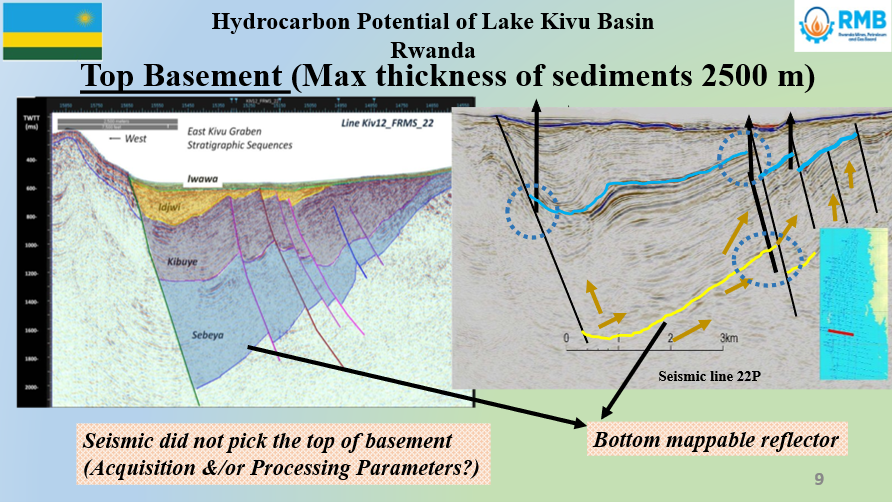
Lake Kivu is situated at the highest point of the western arm of the East African Rift System (EARS), and it is part of the Albertine tectonic graben. The water depth of the lake varies from 50 m to over 450 m. The commercial reserves discovered in the Albertine Rift Basin highlight the hydrocarbon potential of the Lake Kivu Basin.
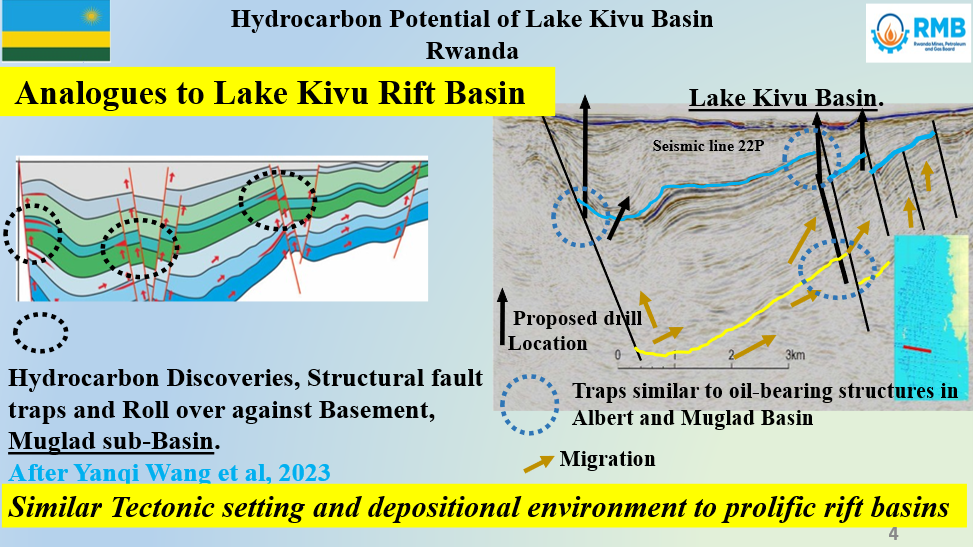
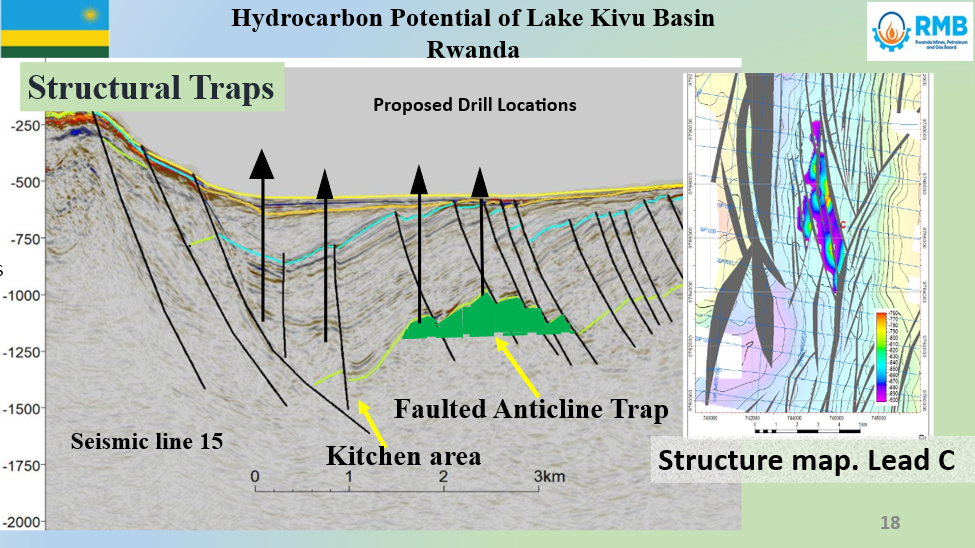
The existing data confirmed the presence of thermo-genic hydrocarbon gas (C2+), structural traps, and thick lacustrine sediments. The tectonic setting, the depositional environment, and the petroleum system of Lake Kivu Rift Basin is analogous to the prolific Albertine, Lokichar and Muglad rift basins, and accordingly the basin has attractive petroleum potential.
Rwanda has developed a Production Sharing Agreement model (PSA) with attractive fiscal and legal terms. Rwanda is ready to negotiate and finalize a PSA with terms and conditions which are mutually beneficial. Interested companies will be provided with a data package to enable them to make their technical evaluation of the basin.
“Rwanda Mines, Petroleum and Gas Board (RMB) is extending special invitation to investors interested in upstream petroleum. The Lake Kivu Basin represents not only an exciting exploration frontier, but also a gateway to sustainable partnerships and shared prosperity” Alice Uwase, CEO, RMB.
Lake Kivu Methane Gas Exploitation
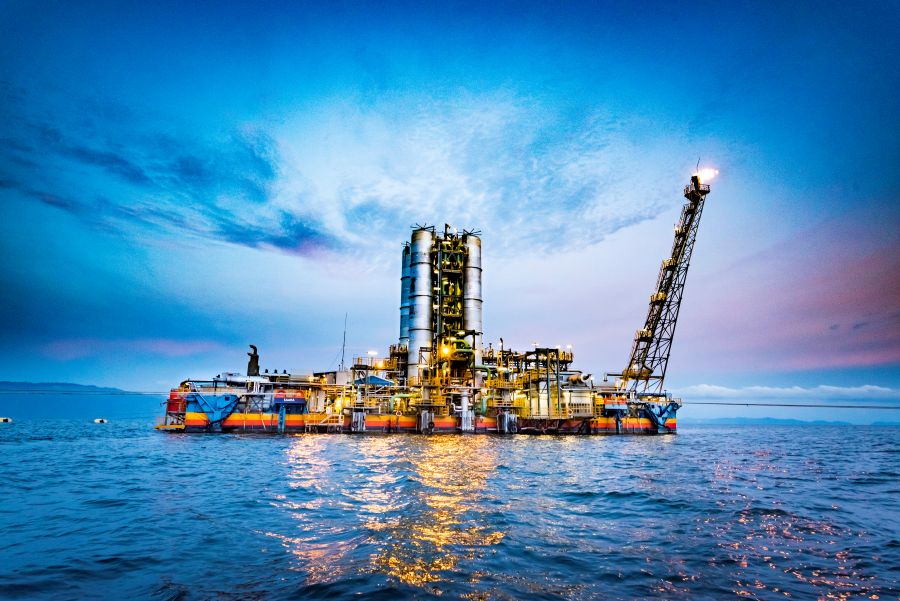
Lake Kivu is located on the border between the Republic of Rwanda and the Democratic Republic of Congo and covers an area of 2400 km2. The lake is estimated to hold 60 km3 (2.1 TCF) of methane gas shared between the two countries.
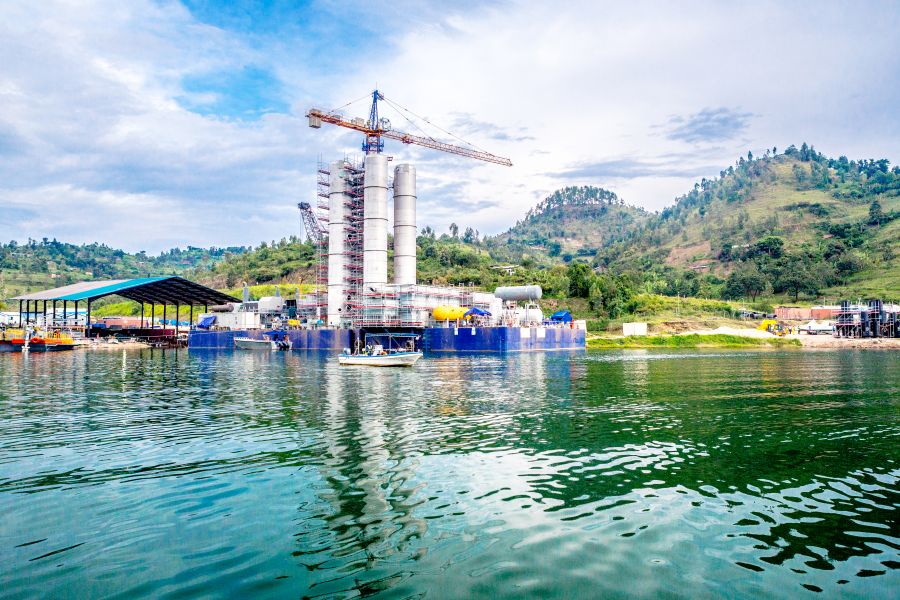
Methane gas dissolved in Lake Kivu is one of the major sources of energy in the country contributing about 76 MW of electricity generation and the ongoing CNG project that will produce about 40MSCF/D in 2028 New investments are underway for additional power generation plants. Also, Rwanda is encouraging the economic exploitation of produced CO2 gas from Lake Kivu.
DOWNSTREAM PETROLEUM SECTOR
Importation of Petroleum Products
Rwanda imports all its petroleum products. The key market players are private companies which import products for local distribution and re-export. The consumption of petroleum products in Rwanda stands at an average of 720 million liters per annum.
Storage Infrastructure Development
Rwanda is continuously developing storage facilities with capacities to meet the required petroleum consumption. The current total storage capacity is 118 million liters, while the target is to have 230 million liters by 2029 and 299 million liters by 2035 to improve the national self-reliance in fuel and supply security and to cater for the growing local demand and re-exports
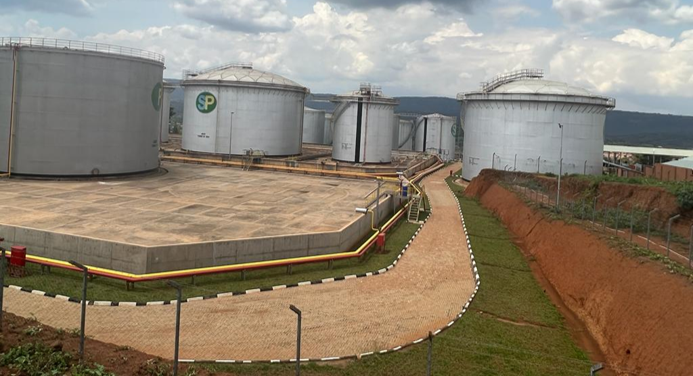
Furthermore, there are LPG cylinder filling plants with a total storage capacity of 849.7 MT, while a bulk storage facility with the capacity of 8,680 MT is under construction and expected to be completed by July 2026.
Clean Energy
The Government of Rwanda has put in place policies and strategies to reduce the use of polluting biofuels such as wood or charcoal used in cooking and replace them with cleaner and more affordable energy sources such as electricity and LPG. New policies also encourage electric vehicles to reduce the use of petroleum products in transport.